
In April, I received news that a friend from my high school graduating class passed away. As details emerged about his death, it was confirmed that he took his own life. This opened my eyes to the fact that mental health, especially in men, is a silent pandemic that has been unfolding in front of our eyes for years.
The death of my friend came as a shock to not only me, but to everyone I have spoken to about this matter. On top of being highly intelligent, he was always known to tell a joke, put a smile on people’s faces and the common consensus always was that “he’s a good lad.”While all of these things may have been true, no one knew his struggles.
In my country, the Republic of Ireland, this is something that is becoming increasingly more common. There is a stigma surrounding men expressing themselves and how they feel.
This has been the case for decades and can even be seen in literary works. In Seamus Heaney’s poem “A Call,” Heaney reflects on a phone call with his parents. When he hears his father’s voice, he says, “I nearly said I loved him.” He could not even express his love for his father.
Talking and expressing feelings as a man is seen as such a taboo issue that people can’t even tell their parents that they love them.
I am lucky enough to have relationships with people here and at home that expressing my feelings was commonplace, with the aforementioned stigma being broken down, but there was a time where this wasn’t the case.
I remember having my first notable panic attack when I was 18. My grandfather had passed away two weeks beforehand and my family were going to visit to celebrate the new year with our cousins and our grandmother. When I first felt the panic attack come on, I asked myself, “What is wrong with me?” I texted my closest friends and they said, “You’ll be fine,” almost dismissing how I was feeling.
When I spoke to my parents about this, they told me that how I was feeling was completely normal.
I had always gotten nervous before track meets and soccer matches and was always told that they were “pregame nerves,” and that I would be fine. But, these nerves often got so bad that I would grossly underperform when it mattered the most. Upon reflection, the reality is that I have been suffering from panic attacks and anxiety for years.
When I started talking about my feelings when I got to college and leaning on my support systems here, these panic attacks and mental health issues that I was dealing with became easier to manage, and talking them out was the best remedy.
Struggling with your mental health on your own is more of a burden than if you reach out to someone. UFC fighter Paddy Pimblett used his platform to talk about mental health. He said, “If you’re a man and you have weight on your shoulders, and you think the only way you can solve it is by [taking your own life], please speak to someone, speak to anyone. I know I would rather my mate cry on my shoulder than go to his funeral next week.”
I wholeheartedly endorse this message. We need to create a safe space, not only at Goshen College, but in every space we find ourselves in, where mental health can be spoken about man-to-man, with no judgment. We have facilities like these on our campus, with our counselors, Res-Life team and other staff members all wanting the best for everyone.
So I ask you: Regardless of whether or not you are struggling, talk to someone. You don’t know what is going on in someone else’s head, and they don’t know what is going on in yours. A simple conversation could be enough to save someone’s life.
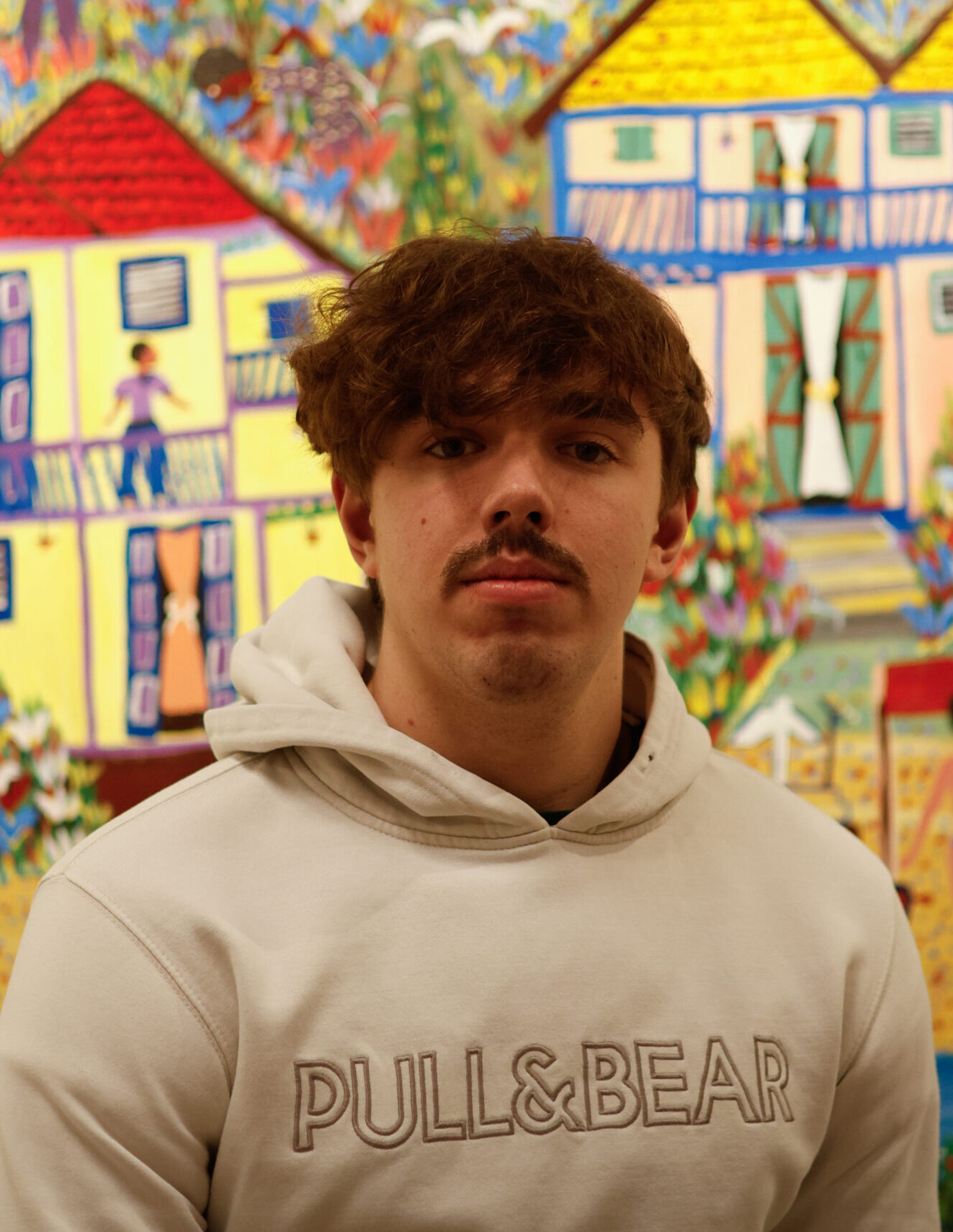
Liam Shaw is a sophomore journalism major from Galway, Ireland. He’s a part of the track and field team, throwing shot put, discus and the hammer throw. He enjoys spending time with friends and supporting the Maple Leafs.