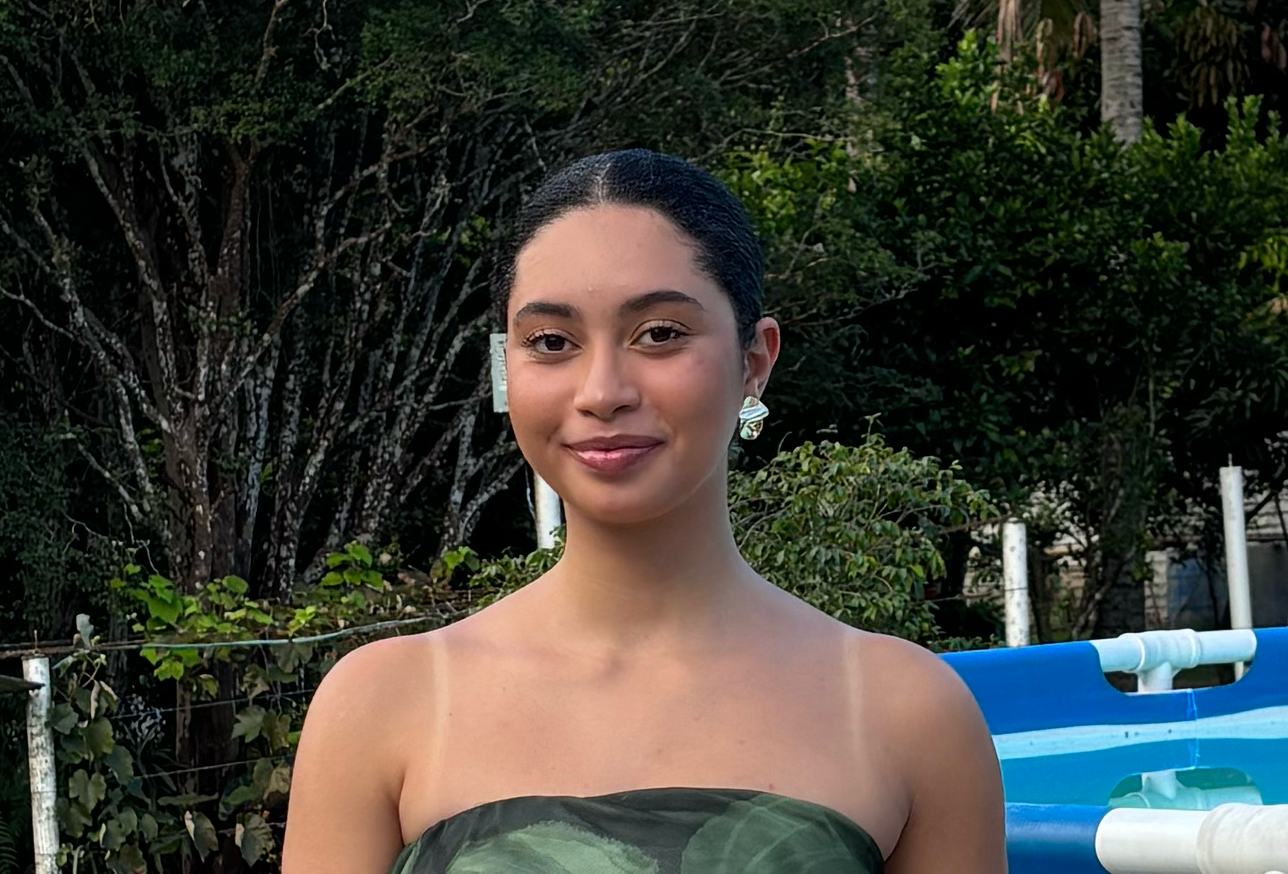

I’m writing this article at an airport waiting for my flight to Indianapolis after just spending two weeks in Brazil to see my family. It had been almost two years since I last saw them. I have my natural hair; I never wear it like this in the United States.
Being back was different this time. Besides occasional calls with my parents, I haven’t been listening to Portuguese much. I realized how used to life here I’ve become; going to the grocery store and using the self-checkout instead of having a full conversation with the cashier about how her kids just turned four and she now spends the day asking questions she can’t answer, or stopping at the gas station my dad always goes to and talking about how college is going with the attendant while he fills the tank.I feel like I lost a part of myself without those daily social interactions. Being an introvert, I tend to talk only when I have to or with people I’m close with, but those small, sometimes forced conversations make me feel included and bring joy to my day. Having the option to avoid them pushes me further into my bubble. In a way, those moments, and the time to be present in them, helped me connect not only with my culture, but with a different version of who I am.
On a more visible level, I returned to a version of myself I hadn’t seen since 2023 when I first moved to the United States. For those two weeks I spent in Brazil, I challenged myself to wear my natural hair. After more than 24 hours traveling between planes and airports, I washed it and let it air dry. For a moment, I felt free.
That feeling usually doesn’t last long. I’m used to the questions and statements that come when people notice my curls: “It looks good.” “How do you make your hair look like that?” “How often do you wash it?” I know the questions come from curiosity, and I’m not criticizing them. I just don’t like standing out.
But this time, the questions never came. In public, my hair didn’t stand out. People had curls just like mine. That silence, the lack of attention, made it easier to keep wearing it that way for the full two weeks.
Usually it takes me at least an hour and a half to dry and straighten my hair. Friends often ask why I go through all that effort or why I don’t just wear it naturally. I never have a simple answer, and I’m not sure how much people really want to hear.
Straightening my hair helps me blend in where I live now. In many spaces, it allows me to pass and avoid standing out. That’s one of the privileges of being biracial; I can choose when to stand out and when to disappear. Sometimes that choice feels easier, even if it means spending hours getting ready and asking my roommates to bring me food because I’m still working on my hair before dinner.
I realize I do something similar in my academic life. As a journalism and communication student, I want the story to stand out, not my ethnicity or my background. So I make small decisions to make things easier: softening my accent on the radio or introducing myself as Ana Alves in audio and video productions because people don’t always know how to pronounce Machado.
Another dilemma I faced this year was deciding how to cover immigration policies under President Trump and the protests that followed. I stayed involved in discussions and story ideas, but I chose not to put my name on photos, articles or interviews about the issue.
That decision left me conflicted. I feel like I have a voice and could help represent these communities. I also recognize my privilege; I am here on a legal student visa. While I don’t know what many immigrants have gone through to get here, I believe I can help tell those stories.
But there is still a quiet fear, the same fear I felt when deciding whether to return to Brazil during the summer, or when passing through immigration at the Atlanta airport, and the same fear I feel writing this.
Again, going to Brazil meant more than seeing my family. It meant seeing another version of myself: the fearless girl who moved to the United States at 17 chasing more opportunities to tell stories and help people understand the world we live in. I hope I brought that girl back with me.
Ana Alves Machado is a sophomore journalism major from Rio de Janeiro, Brazil. She is best friends with the squirrels.