
Thanksgiving is the second Monday of October. At least it is in Canada.
When my family lived in Calgary, Alberta we would make the 45-minute drive up to my aunt and uncle’s house for Thanksgiving dinner.Then, sometime in November, we would have an additional smaller Thanksgiving dinner at our house. We called it “American Thanksgiving.”
This past Sunday, we celebrated Canadian Thanksgiving at East Hall.
When did it become Canadian Thanksgiving? When did Thanksgiving break move to November?
I have long wrestled with my identity as it relates to nationality. I was born a Canadian-American dual citizen in Ohio. I moved to Calgary when I was 4, and lived there until I was 15 — 11 years. I was in Harrisonburg, Virginia until I was 18, and now I find myself in Goshen. By the time I graduate, I will have spent almost exactly the same amount of time living in both countries.
As we celebrate Hispanic Heritage Month, I want to recognize I’m not the only one with a somewhat complicated relationship to nationality. To read more on this from a Latino perspective, see this week’s opinion articles on page 4.
Growing up in Canada, the U.S. is constantly the butt of the joke. I’ve even heard making fun of the U.S. referred to as Canada’s main national pastime after hockey. I vividly remember being in grades five and six during the 2016 U.S. election cycle and every single day at school someone in my class would make a joke at Donald Trump’s expense. For any young child even subconsciously trying to fit in, saying, “I am American,” was never in the question. The desire to distance myself from my U.S. citizenship stuck with me.
There is also the question of where is home. I found myself pondering this in Ecuador this summer, while on Study Service Term. Since moving away from Calgary, I’ve yet to find myself in one place for more than three years. My parents still live in Harrisonburg, but almost every other aspect of my life is now in Goshen — yet returning to Calgary still feels like going home.
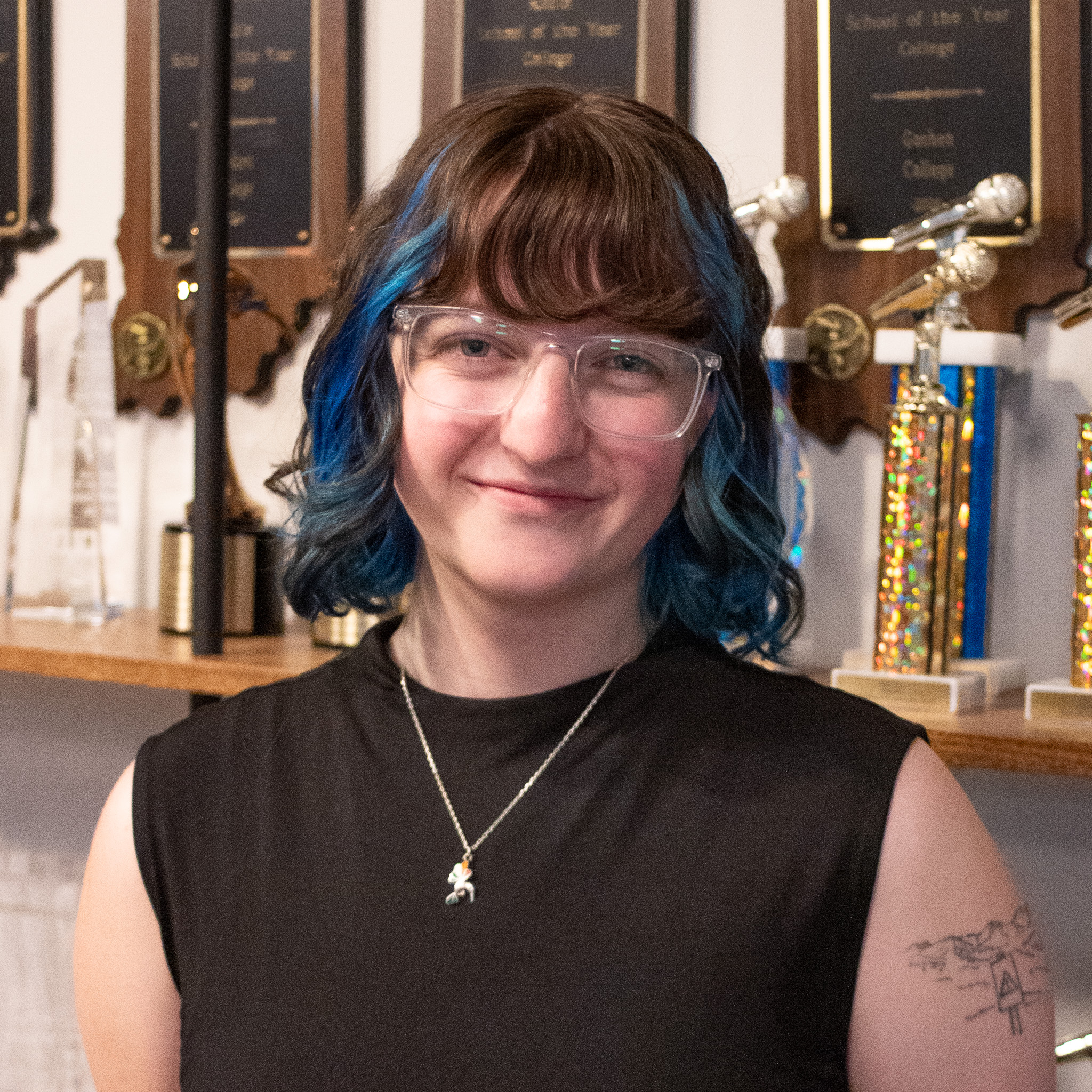
I’ve realized that I don’t have to know. When I’m asked, “Where are you from?” my short answer is, “I’m most recently from Harrisonburg, Virginia,” as you can see in the biography above.
While being a dual citizen and growing up in various places has shaped me and is important to me, it is not all that I am.
While I still don’t like to claim American as an identity, I am still a white person with U.S. citizenship. I have privilege and ancestors who were complicit in colonization and white supremacy, as I am to this day. I have a responsibility to use my privilege to fight against the systems of oppression that uphold American society. I also have responsibility to do the same thing in Canada where the communities I’ve called home were also complicit.
While reckoning national identity with responsibility to do justice, I was reminded of a time I got to visit the Stoney Knoll First Nations in Saskatchewan in 2019, during a youth retreat with Mennonite Church Canada. The Stoney Knoll were initially granted land in the 1870s, but it was sold by the government to Mennonite and Lutheran settlers in the 1890s. They are still working to regain federal recognition.
During our visit, we talked with one of the members of the Stoney Knoll First Nations. He spoke of the history of his tribe and their relationships with local Mennonites who are now working with them towards reconciliation, but the line that has stuck with me since is, “We all bleed the same.”
We all have the same blood coursing through our veins — beyond these labels we put on ourselves to define who we are. We have a responsibility to care for each other. To seek justice with and for each other.