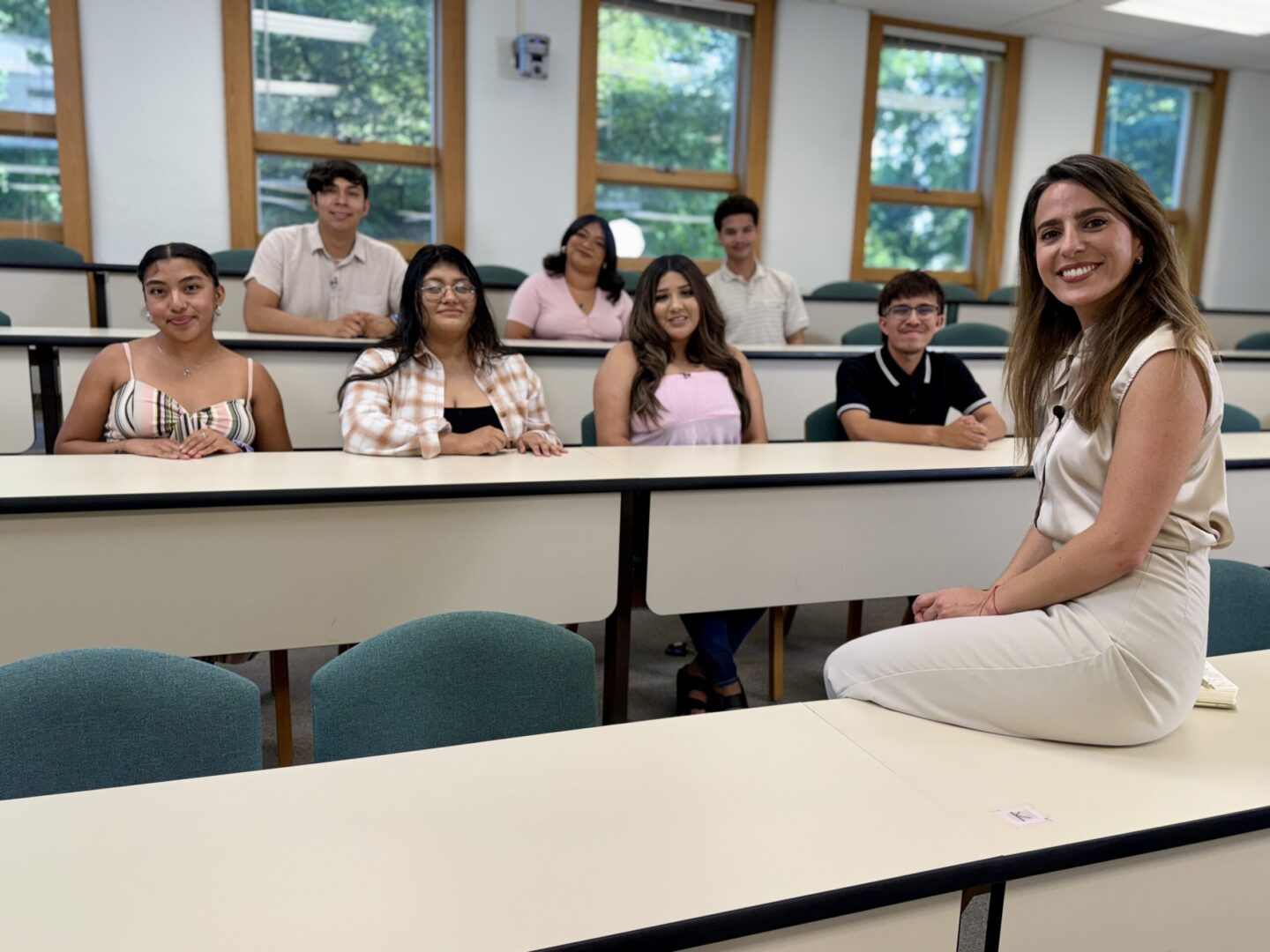

A documentary was premiered on YouTube by Telemundo, a major Spanish-speaking television channel in the United States, on Nov. 20, 2025. The 53-minute documentary is titled “Talento Desperdiciado: Universidades, Latinos y Trump,” which translates to “Wasted Talent: Universities, Latinos and Trump.” The documentary features several students who attend Goshen College.
Angelica Garcia-Ponce, a junior social work major, explained that she was notified of the opportunity via email in the early summer of 2025 from a GC faculty member whom Telemundo had contacted. Telemundo was looking to do a piece on the students studying at Hispanic-Serving Institutions. The Department of Education website states that HSIs are a federal designation that colleges and universities can receive from the Department of Education if at least one-fourth of the student body is Hispanic. The grants given out to HSIs were set to expire in September of last year. They were then declared unconstitutional by the Department of Justice under Donald Trump’s recent administration, so the grants were not reapproved. This meant that approximately $350 million worth of funding was cut from HSIs around the country.Filming for this documentary occurred at the end of June 2025 for the GC students and faculty involved in the project. Garcia-Ponce explained that she filmed for two days; the first day was on campus, and the second day occurred in her home, including interviews with her and her family. She said that she was more comfortable on the first day with her peers, but eventually eased into the home filming as well due to the respect and professionalism that the Telemundo reporters showed throughout the day.
Garcia-Ponce highlighted the struggle of seeing backlash against the story she and her family chose to share. She remembers seeing clips of the video on social media platforms, including one with her mother talking about the United States as the country of her daughter, who was born, studies, works and lives here. Garcia-Ponce recalled a comment calling on Hispanics to assimilate into the country if they wanted to claim it as their own. “What do you know about me?” Garcia-Ponce recalls thinking.
The documentary contained many viewpoints intersecting the topics of higher education, Latinos and the current administration. GC students and faculty are mainly highlighted as the testimonials of this documentary; they offered personal reactions to the questions asked of them relating to their higher education journeys. Many other professional and student interviews are also conducted with people across the country.
The documentary begins by featuring the stories of Latino students before moving into more details about Affirmative Action and HSIs, as well as the legislation and litigation related to them in recent American history. It also underscores the differences between HSIs and other Minority-Serving Institutions; HSIs serve, on average, more students of other races than of Hispanics themselves, while also making up about 30% of the current Latino student body across the U.S.
The documentary concludes with the importance of continuing to encourage Latino students to attend schools and to continue protesting against the Trump administration’s decision to push down diversity, equity and inclusion initiatives, especially in colleges and universities.
One of Garcia-Ponce’s goals in giving her voice to this project was to counter the misconception that HSIs, as a program, are simply giving away money to Hispanic students. While schools with the HSI status may receive additional funding under DEI initiatives to support their students, the stereotype that Hispanic students can simply state their race and get a check in the mail is untrue.
The documentary narrator explains that “Estos subsidios no se destinan solo a los hispanos; pueden utilizarse para infraestructura, adquirir equipo de laboratorio, contratación de profesores, servicios bilingües, ayuda financiera y becas. Buscan fortalecer estas instituciones y crear un ambiente culturalmente sensible a las necesidades particulares de los latinos.” This translates to “These grants are not intended solely for Hispanics; they can be used for infrastructure, acquiring laboratory equipment, hiring teachers, bilingual services, financial aid and scholarships. They seek to strengthen these institutions and create an environment that is culturally sensitive to the particular needs of Latinos.” Therefore, the narrator explains that cuts to HSI grants result in fewer resources for the school and fewer opportunities for the students to engage with.