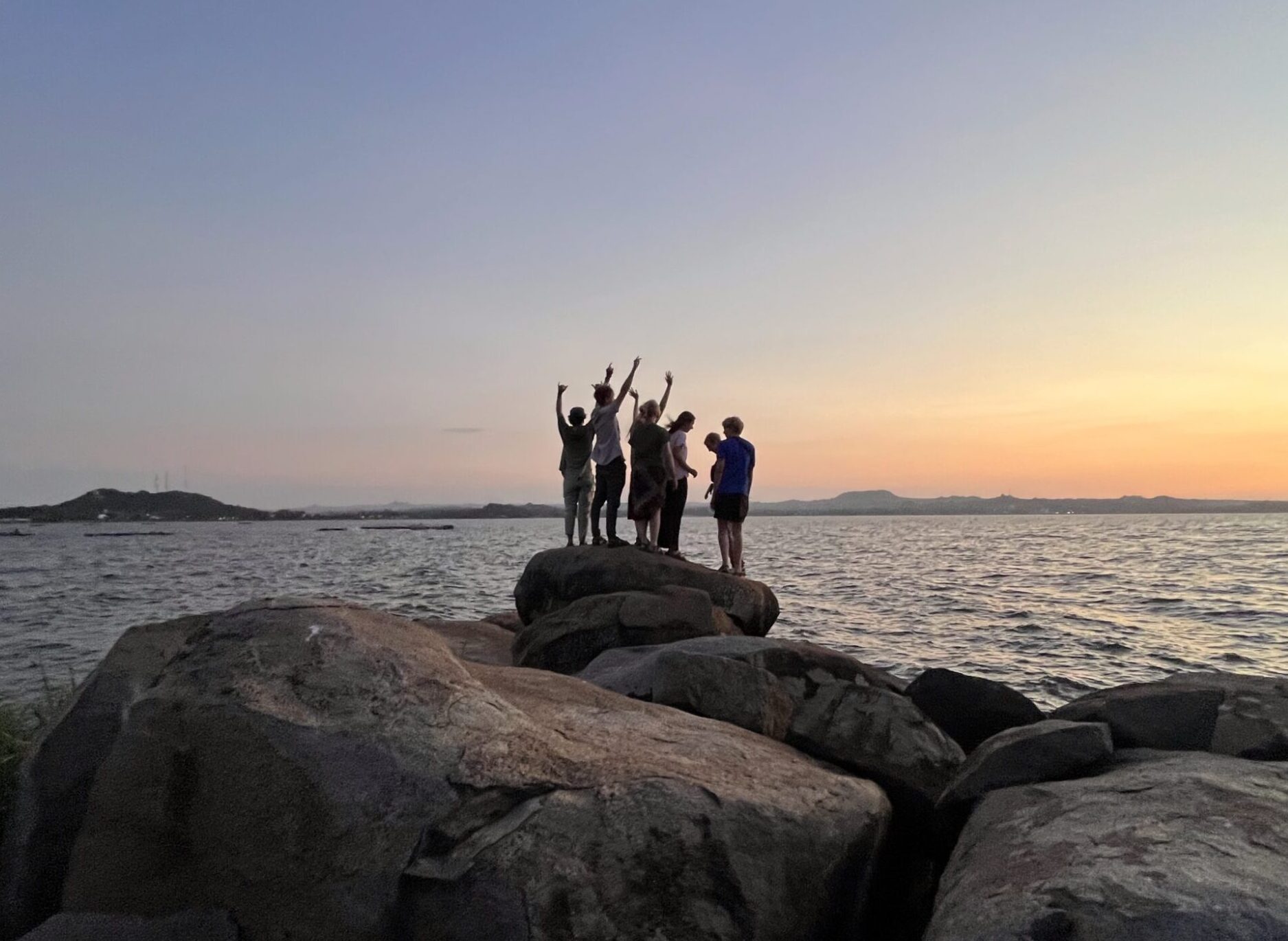

Goshen College has announced that a Study-Service Term cohort will return to Tanzania in the spring semester of 2027. This will mark the eighth occasion that the college has sent students to the nation.
This unit will be led by Phil Allman, associate professor of marine biology, and Tim Pinion, a retired National Park Service employee, who served in various roles between 2015 and 2023.Jerrell Ross Richer, co-director of global engagement, explained that this SST unit is similar to every other cohort, in that the students will spend six weeks doing their study before transitioning to service for the second six weeks.
The students will spend time in Dar es Salaam as well as spending time in Arusha, which acts as a gateway city for various national parks in eastern Africa. One of the main attractions for this particular SST is the visit to Serengeti National Park.
Ross Richer explained that the park has “a lot of what people call charismatic megafauna with big animals. So you can see elephants and zebras and all kinds of others. We have, I believe, always gone to Serengeti National Park when we’ve done the Tanzania SST, and so when we go to Tanzania again in 2027, we’ll do that again.”
The connection between GC and the country arises from the Mennonite Church; their partner in this SST is the Tanzanian Mennonite Church. “We have a fraternal connection, if you will, kind of a brother-sister-sibling connection to other Mennonite churches in other parts of the world,” Ross Richer said. He also mentioned Pastor John Wambura as the main Tanzanian connection to GC. “He’s been to the Goshen College campus, he was here a couple of years ago when I first met him and I met him about a year ago,” he said.
The students will work alongside Action for Ocean, a nonprofit organization that was set up to tackle the pressing challenges facing the Tanzanian marine ecosystem. “AFO is trying to bring back the mangrove forests … they’re one of the best forests when it comes to carbon sequestration, so taking carbon dioxide out of the atmosphere and holding on to it in the earth,” said Ross Richer.
Students will conclude their experience on a retreat in Zanzibar, a tropical island off the coast of Tanzania. This will give students a chance to unwind “with palm trees swaying in the wind and enjoying the beaches and swimming there,” said Ross Richer.
He believes that this SST experience will be beneficial for GC students, especially due to the fact that they will be able to speak one of the national languages, Swahili. “Imagine telling [an] employer that you know a little bit of Swahili, and that you spent three months of your life living in Tanzania … you know what it is like to cross cultures and you know what it’s like to live on the other side of the world, you know what it’s like to be a minority in a very different environment, but that distinguishes you from other people,” Ross Richer said.
Peter Moser, first-year secondary education and biology major, is part of this Tanzania cohort. Moser expressed his excitement to go and experience a new country. “I think it’s a good opportunity to get a perspective of the world that you can’t get in the United States, so I’ve been looking at my options, and Tanzania seemed interesting,” Moser said.
Another aspect of Moser’s desire to travel comes from his family’s connection to going on SST. His brother, sophomore environmental science major Levi Moser, is currently in Ecuador after spending last spring in India. “You hear stories about that and it’s part of the culture, so there’s definitely some aspect that’s motivated by my family,” he said.
Moser also said that having Allman as a leader was really appealing for him. “As a biology major, that makes it a really attractive option for SST because you’ll get a perspective of the natural world in an ecosystem that is dramatically different than northern Indiana,” Moser said.