


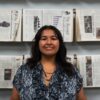
Eliza Alemán
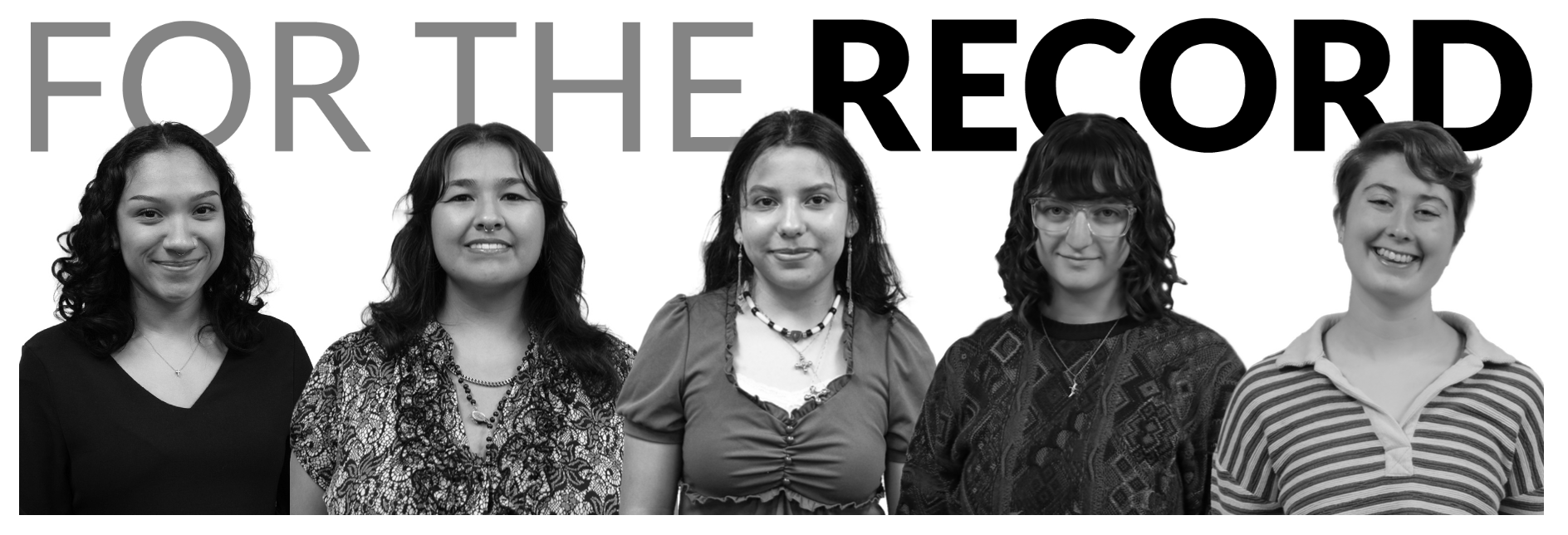
I have been intentional about rejecting the notion that I must work harder if I want to succeed in the field of journalism. My commitment to this mindset isn’t about rejecting hard work; it’s about rejecting misogyny.The “grind” is misogynistic at its core. It only reinforces the belief that you are worthy of respect only after you prove yourself. It also dehumanizes the day-to-day experiences that journalistic writing hopes to capture.
I have found that my writing and reporting skills are better when I put people first. My sensitive heart and assertive tone — the characteristics that society has conditioned me to hate about myself — have served me well in an interview.
An organizational commitment to inclusive journalism doesn’t just require diverse sources, but also diverse reporters. My gender and ethnic identity provide me with a different worldview. Being a Mexican woman in journalism means that I get to tell stories that would have otherwise been ignored.
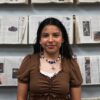
Aaliah Higareda
When I first came to Goshen College, I didn’t have the intention to go into journalism. I was set on being a graphic design major with a computer science minor and getting my master’s in web development or web design.
This path quickly dissolved when I almost failed programming during my sophomore year. Feeling lost and intimidated by mathematic comprehension, I immediately switched my minor to communication.
At this point, I was working with The Record as a photographer and layout staff, so it felt like the most logical option for me.
During this first year of contributing, I noticed, listened and observed. I would go to the newsroom every Wednesday night, get assigned a page, layout the page, then leave. I watched as everyone around me laughed, gossiped and connected in ways I deeply desired.
Why would I even put myself into this situation? Yes, for my career, but in the back of my mind, a little brown girl lives. She loves writing and doodling with Crayola markers in her composition notebook. Creating a fantasy life she thought she could never reach.
That brown girl’s desires and passions are still within me. She whispers to me that, in the end, it’ll all be worth it. Speaking out about my experience is worth it knowing another person will feel heard and seen.
Having a voice, being a woman, a person of color, human, takes courage. It takes courage to look past all the heartache and pain and continue.
Being a brown woman means protecting your peace while protecting the little girl whose desires lead you to where you are now. Using that passion to then inspire other little girls and women that their dreams are achievable and true, just like yours.
Mafe Aguilar Vargas
During my time at GC, I’ve valued the opportunities I’ve had to take on, especially leadership roles. Being part of The Record was one of them, where I found a passion for working with others, finding creative solutions to any problem and making it a fun experience for me and others.
I’m grateful for the opportunity to work alongside other women and create an environment where everyone is included, welcomed and respected in the learning process of our careers.
We continue to build a pathway for more women to become leaders, and we should inspire one another to lead.
Mackenzie Miller
Equipped with one year of experience writing for my high school newspaper and the reassurance of my teachers that I was a good writer, I walked up to The Record’s table at the club fair during orientation week. I recall Anna Groff, an associate professor of communication, telling me something along the lines of, “That’s great! You already know what you’re doing!”
… I did not …
After writing my first article in the fall of my first year, I got an email from Lukas Bontrager-Waite ’24, the arts editor at the time, that there were AP style things I missed, but I did a good job — so, I kept writing.
In the spring, I started writing almost weekly for news. Tyson Miller ’25, the news editor that semester, invited me to Wednesday night layout. While admittedly a bit nervous, I finally walked over to the newsroom one Wednesday night before spring break.
From there, I was in the newsroom almost weekly. I learned how to copy edit and lay out pages. I fell in love with the late-night buzz — the balance of productivity and laughter. To this day, layout is still one of my favorite parts about being in The Record.
Yet, my love for journalism goes far beyond the walls of the newsroom. This past summer, I followed it to Greensboro, North Carolina to cover the Mennonite Church USA biennial convention for Anabaptist World. I found the same joy in interviewing people and uncovering the story; even in an unfamiliar environment.
As digital editor, I can now look back and see how much I’ve grown since that first article — the endless late nights and the people who have been my mentors and peers. Now, I usually do know what I’m doing.
Yet, the journey doesn’t stop here. There’s always more stories to tell and voices to be heard, and I am grateful to journalism for providing that platform.
Kate Bodiker
When I entered college, I was staunchly determined to avoid journalism. I was a fiction writer, dangit, and I wouldn’t be lured away from my dreams by a more “practical” writing style. But, when Sarah Miller ’25 approached me after the clubs and organizations fair and asked me to write, I figured I’d say “yes” just to appease her. But, in the end, I enjoyed it enough that I said “yes” the next time, and, well, I’ve never been very good at saying “no,” so the rest is history.
Before you knew it, the next year I was writing two to three articles for The Record every week and taking additional journalism classes. Give it another year and I was in charge of the biggest page, despite having never been on the staff before. After tackling the next most sizable the following semester, it seemed only natural that I would apply for executive editor the following year. And if I was doing that, I might as well have an internship where I would be doing some journalism.
Flash forward one more year, and here I am, surrounded by powerful women, just like how I started, and I’m considering taking a job in journalism after graduation. Talk about a 180º. But, in the end, I wouldn’t have changed a thing.