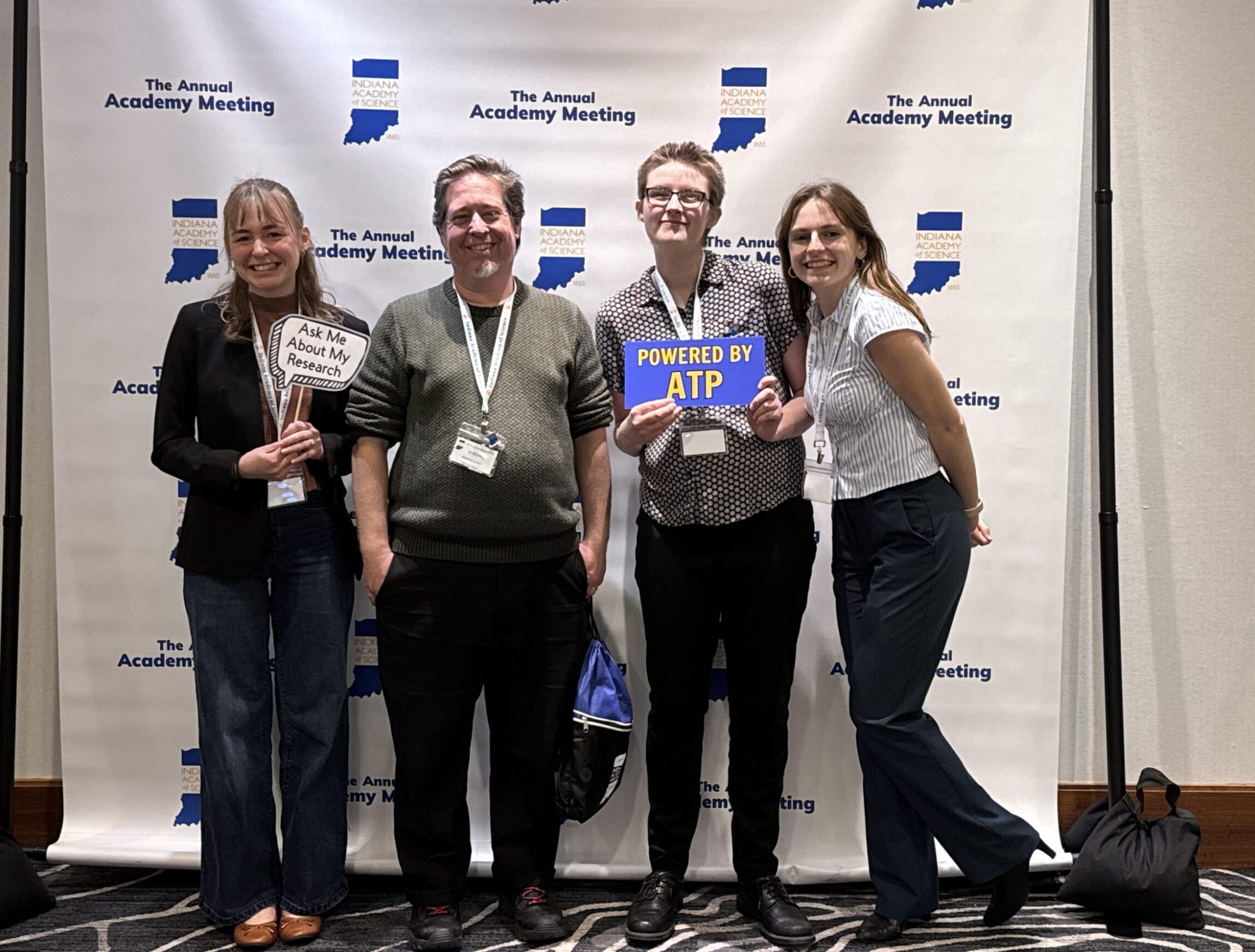

The Annual Academy Meeting of the Indiana Academy of Science took place on March 21 in Indianapolis. Among the lectures, three Goshen College students shared their research with the world.
The 2026 conference was the 141st in Indiana Academy of Science history, inviting students and professors across Indiana and the Midwest. The conference featured senior and junior scientists from industry and academia, graduate and undergraduate science students, engineers, science educators from the state’s public and private high schools and middle schools, and science enthusiasts.Katie Dunderman, a junior marine science major, shared a poster presentation on research she completed with Phil Allman, associate professor of marine biology, who is located in GC’s J.N. Roth Marine Biology Station in the Florida Keys. Dunderman educated conference attendees on her and Allman’s “Florida Keys Sea Turtle Photo ID Project.”
The project utilises photos submitted by divers and snorkelers, and identifies individual turtles based on their unique features. Then, Dunderman and Allman plotted the identified turtles into a database named the “Internet of Turtles.” The pair previously presented their research in October, located in Florida.
Kelsey Moore, senior environmental science and art major, presented her research on macroinvertebrates. Macro-invertebrates, in Moore’s words, are the “nymph insects in the soil of waterways.” Moore carried out her research on the Elkhart River and in a creek near her home in Greencastle, Indiana. The studies concluded that more midge larvae were present in the colder months on the Elkhart River. Moore also focused her findings in relation to the water quality, and later compared her results to the state published water quality data.
Joining Dunderman and Moore at the conference was Cal Swartzendruber. They are a senior biochemistry major, and discovered the conference after being approached by Moore. Swartzendruber found the conference to be nerve-wracking, but rewarding. Swartzendruber presented research completed over the past summer in Philadelphia. They were part of the research experience for undergraduates and tested different drugs against a virus called adenovirus that “basically just causes the common cold in humans.” A highlight of the conference was “listening to a bunch of other people’s research as well,” Swartzendruber said.
Following the conclusion of the current spring semester, both Moore and Swartzendruber will graduate. Beyond GC, Moore aspires to continue research and working outdoors, “I really want to get into field research, especially while I’m young” she said. Moore is currently unsure of where the field research route will take her, but remains “open to anything,” she said.
Swartzendruber intends to learn further and achieve a PhD in the field. “I would love to be able to expand on the research that I’ve already done and find applications for it in new and exciting ways,” they said. Until becoming a graduate student, Swartzendruber will apply to work as a lab technician, ideally in a research lab.