
This summer I had the honor of doing a Maple Scholars project with Kendra Yoder, professor of sociology and women’s and gender studies, to start off a longer project focused on the Prevention Intervention Network.
PIN is a student organization on campus that aims to lower the rates of interpersonal violence through peer led education that takes place on campus and in the community.There have been over 100 PIN graduates and ten years of bystander training provided to over 2,000 students on campus — but this project was the first to systematically document the history of student activism and leadership that has helped make PIN such a successful organization.
As a biochemistry student, my background in research is much different than the qualitative research methods that I used this summer. This was a great opportunity to expand some of my research skills; one of those being my comfortability with doing qualitative interviews.
I did a total of seven interviews with individuals that have played important roles in the starting and continuation of the program. These individuals included the founding faculty, the first students in PIN, faculty advisors, and administrators that have been involved. During these interviews I was aiming to collect as many stories as possible about their experience with PIN.
I was initially nervous about conducting so many of them, but I quickly discovered that the conversations with people that have been crucial to the development of PIN were my favorite part of the project. To me, it was amazing how all of the interviewees provided unique perspectives that could be woven together to form a strong narrative of activism and institutional change.
I have been a PIN member for three years and had heard a little about how and why PIN was started, but these interviews showed me just how much work and dedication was needed to get PIN activated and integrated into Goshen College culture and academics.
To give an EXTREMELY brief summary of how and why PIN started, in 2015 (and before), students were angry with the college’s lack of support and resources for survivors of sexual assault that happend on campus and on Study-Service Term.
To change this, a group of students and some faculty mentors put an incredible amount of time and energy into bringing the school back into compliance with the federally mandated Title IX policies as well as starting the prevention education program that PIN continues to do.
Since its origin, PIN has expanded to host more events on campus and in the community and developed its own bystander training curriculum with a grant from the federal Office on Violence Against Women.
Knowing this history is so important because there are many policies, protections and resources now that we take for granted. It is also crucial to be able to see how the priorities of PIN 10 years ago are much different than the priorities today, and that is because of the change in student needs and knowledge.
For example, in 2015, PIN students spent a lot of time confronting myths and misconceptions about sexual assault and getting people to name the fact that violence and harm happen at GC and in this community.
Now, in 2026, thanks to national movements like #MeToo, there seems to be more awareness that sexual violence can happen in any community. It is more effective to focus our training on skills to prevent harm so that incoming students have a good understanding of the impacts of interpersonal violence.
These trends have been seen in the pre and post bystander training surveys that first-years do. The data from my interviews also highlighted the adaptations of PIN over the years that have allowed it to thrive.
Other trends that spoke to the reason for PIN’s long term success included the institutionalization of the bystander curriculum that is facilitated in all first-year Identity, Culture and Community classes, the uniqueness of the multidisciplinary group of faculty that provides support and mentorship to student leaders and members of PIN, and the importance of the vision and tools brought to the organization by the faculty members that had a long term investment in the program.
This summer was just the beginning of a longer project that aims to track how PIN alumni have used their leadership skills to impact the communities they have found themselves in beyond GC.
While working on this project, I was able to better understand and appreciate the uniqueness of PIN as an organization and the way that it has been institutionalized at GC. My hope is that it continues to be prioritized as a space and tool to initiate empowering conversations that support student leaders and a safe community.
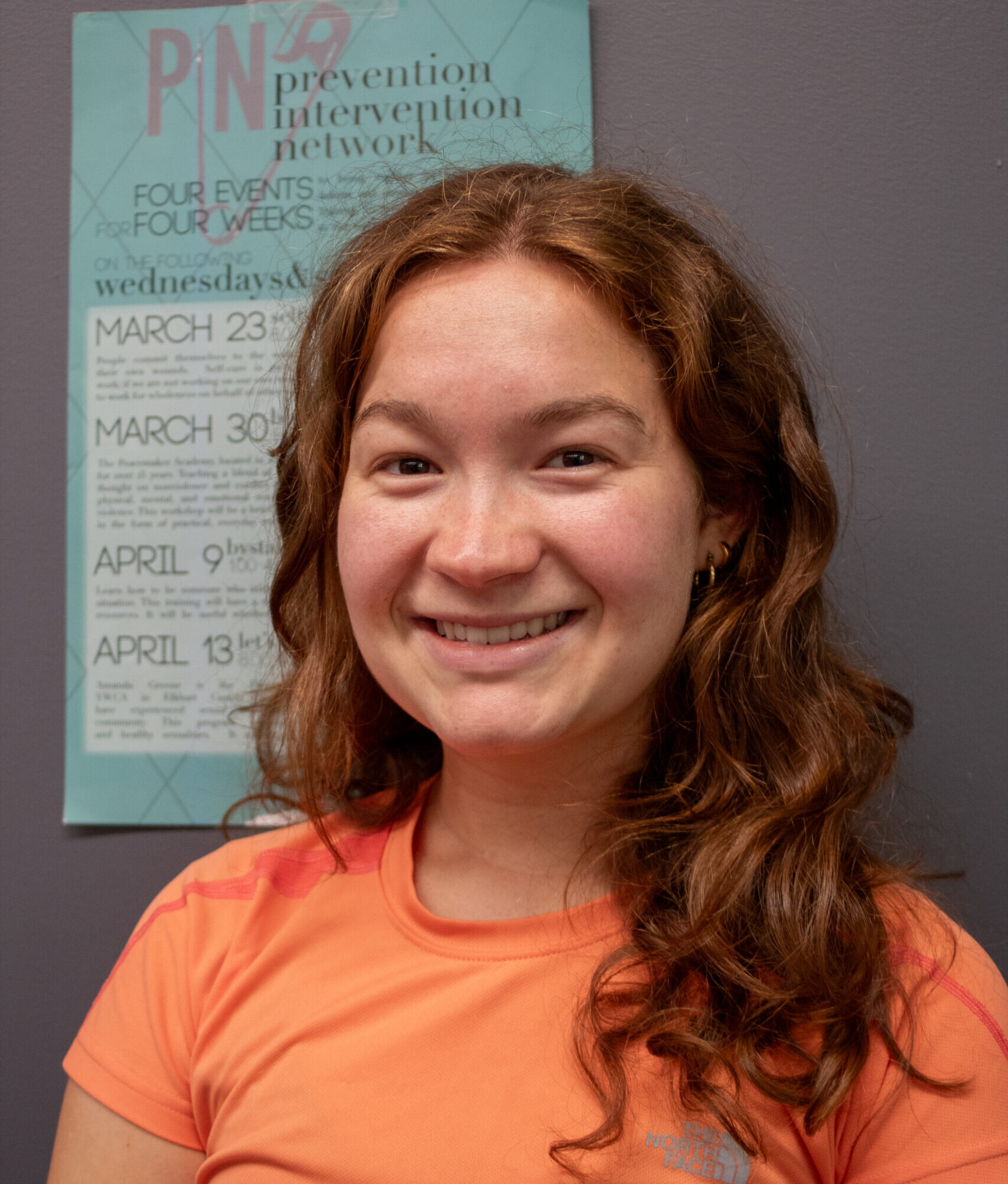
Julia Miller is a senior biochemistry major from Walnut Creek, OH. She runs cross-country, is a part of the pre-health club and is a PIN leader. In her free time, she likes to read and bake sourdough bread.