
On May 15, Pope Leo XIV signed “Magnifica Humanitas,” or “Magnificent Humanity,” his first encyclical, focused on protecting human dignity in the age of artificial intelligence. The Vatican released it on May 25.
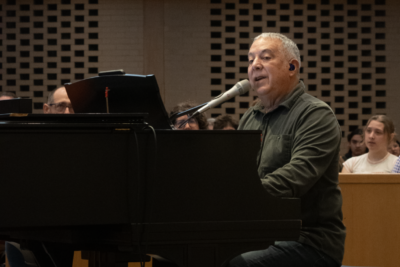
In the 42,000-word document, the Pope asked: “Where are we going? Toward what goal do we wish to orient ourselves? What direction should we choose as people and as a human community?” Those questions are becoming more relevant as AI enters personal areas of life, including faith.Sheri Hostetler, pastor at First Mennonite Church of San Francisco said, “It was becoming increasingly apparent that this technology was potentially going to change almost every aspect of our lives, and as a community we needed to learn together and faithfully discern how we face this,” she said. “What do we embrace (if anything) and what do we resist? We’re not doing this so we can all do the same thing, but so that we can learn from each other where we draw lines and where we show up as a community in resistance.” Hostetler said.
A September NPR/Ipsos poll found that 61% of 1,011 U.S. adults surveyed had used AI. Among those users, 11% had sought religious or spiritual guidance from AI, 13% had used it to generate prayers and 15% had used it to study religious text.
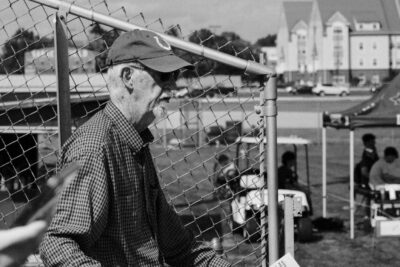
The difference between information and faith is important. “That’s one big distinction I would make between AI and religious practice,” said Kyle Schlabach, a pastor at East Goshen Mennonite Church.
“AI is about gathering and manipulating information. I think a lot of faith and religious practice is about understanding what draws us close to God and what separates us from God,” he said.
The issue becomes more complicated when AI attempts to simulate relationships.
One example is Just Like Me, a company that offers users live video calls with an AI-generated Jesus for $1.99 per minute.
“I think it’s really not wise for people to get into a sort of kind of mental health or pastoral care relationship with a chatbot.” Schlabach said. “People need to know that other people care about them. And part of being a person of faith is taking up Christ’s invitation to care for the people around us and care about their ultimate spiritual needs … there’s no substitute that I’ve ever found for just sitting down,” he said.
Another concern is how companies train the material used in their systems. “People developing AI have just gathered up the intellectual work of hundreds and thousands and millions of people and appropriated it for their own ends and for their own profit without really worrying too much about whether or not that was an ethical thing to do,” Schlabach said.
Some AI companies are exploring the questions of morality. Anthropic said it wants its Claude model to become “a genuinely wise and virtuous agent.” The company has worked with Catholic clergy and other Christian thinkers on questions of morality and spiritual development.
“I think it’s potentially possible to build a model that behaves more ethically, but there’s so many problems with how these models are built in the first place — including the fact the models are trained on vast amounts of human creative work without the creators’ consent or pay, that the models learn from what humans have written so they absorb our patterns of whose voices count, the energy and water used for both training and daily use are significant, and they fall on particular places and communities,” Hostetler said.
“Add in the low-paid data-labeling work being done in the Global South and the concentration of power in a few very wealthy companies inherent in the present form of this technology, and you have a lot of ethical problems,” she said.
David DeSteno, in an opinion piece for the New York Times, questioned whether morality can simply be treated as information. He argued that religion involves practices, emotions and communities that can shape moral behavior. “Every faith tradition uses the body to influence the mind,” he wrote.
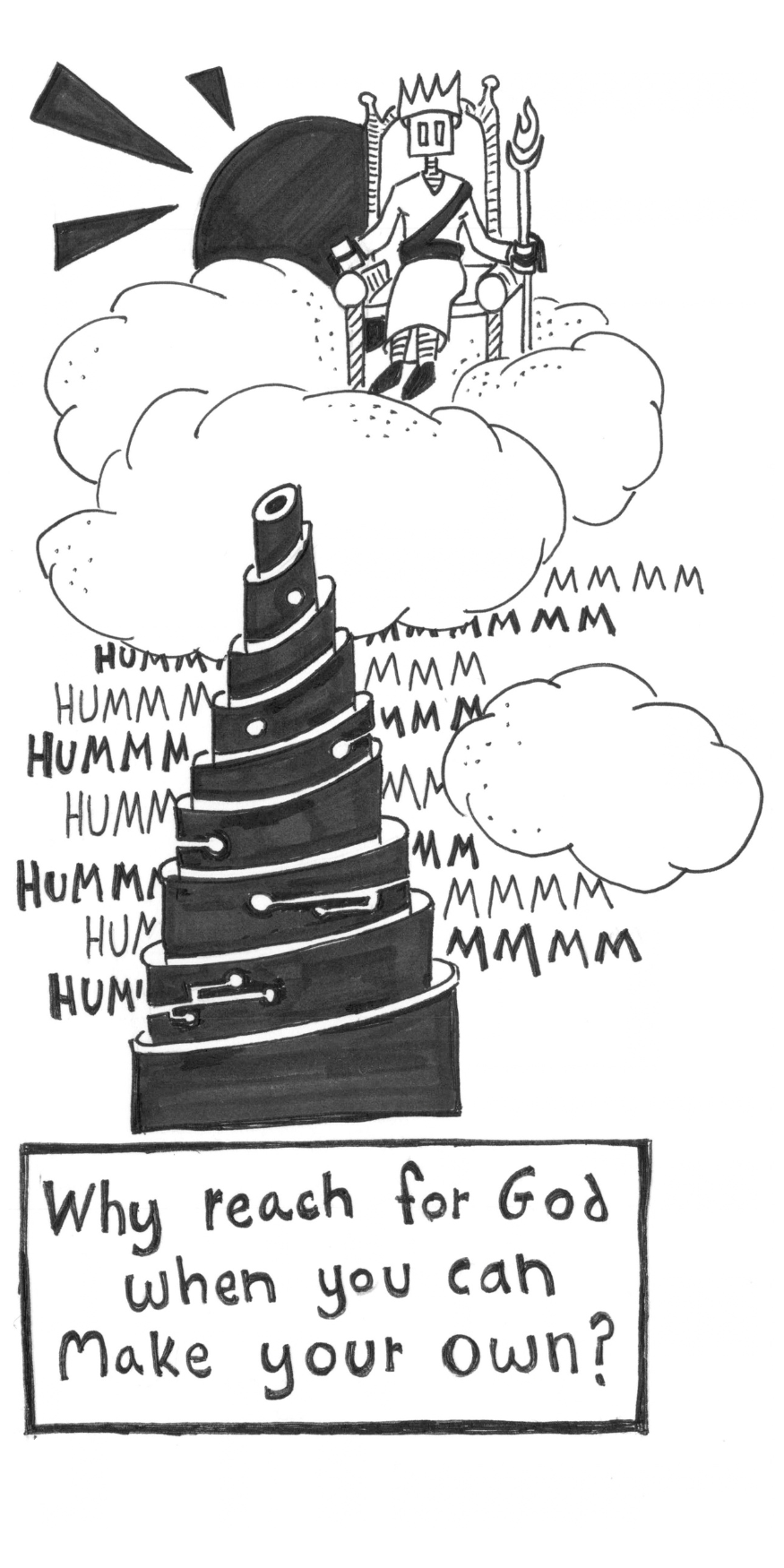
The Pope made a similar distinction in his encyclical, arguing that AI can process information but does not experience relationships, love, work or responsibility as humans do. He uses the biblical stories of the Tower of Babel and the Rebuilding of Jerusalem to illustrate the difference between technological power and community responsibility. He wrote, “The narrative shows how the city is reborn, not through the initiative of one man, but through the shared responsibility of all … It is undertaken with God at the center, which rebuilds relationships before rebuilding stones.”
That idea also applies to the physical costs of AI. Data centers require electricity, water, land and other infrastructure. In her recent Substack article, posted sep. 22 “AI and the Earth: Ecological and Human Costs” Hostetler references Romans 8 19-23, where Paul writes to the church in Rome about the story of the fall where humans overachieved their limits to have more knowledge.
“Paul obviously didn’t have server farms in mind as he was writing this passage. But maybe he understood something that we have to be reminded of: The created world bears the cost of human choices. Creation is groaning under the weight of our technologies,” she wrote.
“I think the people who want to expand it and want money and want to use our collective societal resources, our land, our water to build data centers and to do this they need to make the case that they have things that are worth doing with AI before we all say, okay, those are costs and sacrifices that we’re willing to bear,” Schlabach said.
“People are going to have to find positive uses for it. Otherwise, people will be really more and more resentful and angry about it. I hope that religious leaders can be part of that conversation and help shape that thinking,” Schlabach said.
Hostetler shared an excerpt of a sermon she gave recently. “Isn’t it weird that we’ve gotten to the place in the development of a technology we created that we have to now defend being human? Other advances — the assembly line, birth control — have sparked conversations about what it means to be human, but AI has brought the question front and center in a way nothing else has: What is a human?”
She said, “What’s valuable about us, what makes us special, how is our intelligence different from machine intelligence when the latter can so obviously do some things better than us? There’s perhaps never been a better time to be grounded in Judeo-Christian traditions because they speak to this question in a profound way.”