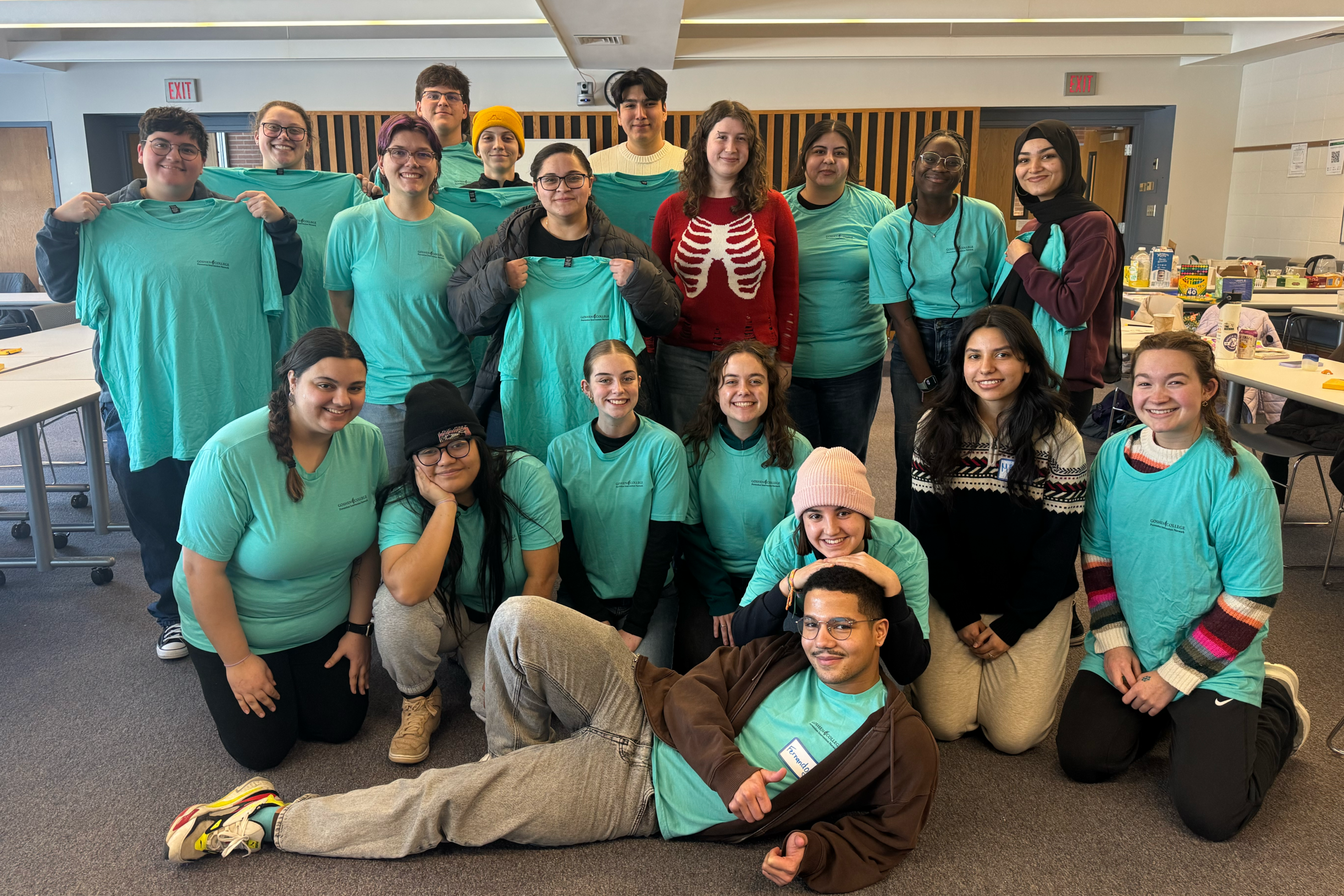
Students at Goshen College participated in a weekend-long training for the Prevention Intervention Network between Jan. 21 and Feb. 2. The program focused on the prevention of different forms of assault and interpersonal violence against students and to educate and make the campus community a safer place for everyone.
While first-year students all receive active bystander training from PIN members which educate them on the warning signs of abuse and ways to intervene, those who seek to join PIN receive a different type of training. This training includes teaching members how to be a community resource and peer educator. Anna Groff, an associate professor of communications and the PIN faculty coordinator, said that at least 15 new members joined the spring 2026 training to be a part of PIN.When new members arrived, they were paired with returning members to create “PIN pals,” their take on a mentorship program. New PIN member Sadie Sherman, a music and psychology major, said, “It made it feel a lot less intimidating that I had a person who’s been in PIN and who was there to answer any questions or just talk to me.” Over the course of this training, activities students participated in included watching a movie, team building exercises, different thought exercises and open discussions about the statistics surrounding assault and abuse towards students.
One standout activity was the “Definitions Exercise.” In this activity, students in groups were given whiteboards and told to define terms like sexual assault, rape, stalking and intimate partner violence. According to Fernando Daza-Jabian, a senior business and peace, justice and conflict studies major, this exercise helped him understand the importance of shared understanding when it comes to defining these terms. “It’s important to always make sure we all have the same shared understanding of what the word actually means and understanding that it could mean different things for different people,” he said.
Another activity members participated in was watching and discussing “Sorry, Baby,” a movie relating to the healing journey of someone who experiences sexual assault. The story follows Agnes, a college student who is assaulted by her advisor, and the journey she goes through as she processes the grief of what she experienced. After watching the movie, PIN members discussed their reactions to the film and observed how bystanders responded to Agnes. Daza-Jabian explained how the movie helped him understand a little bit more about triggers that may occur for survivors of assault and how that affects them in day-to-day life. “It showed different ways [triggers occur that] I thought were key for us to understand, which makes us be a little more compassionate when you’re talking to a survivor or when you’re surviving yourself,” he said. Sherman agreed and said, “It really makes you think about how we treat survivors of sexual assault, and how we treat sexual assault in general.”
Besides the activities, students were educated on the principles of being a resource and on what advocating for survivors may look like. Sherman explained they were taught the procedures to report different things and how to be a support system for those who need it. Sherman added, “It’s good to think about [survivors] and how there might be a possibility of a student coming to you, and what the best thing is you can do to help them.” In this training, a specific approach to supporting survivors was highlighted; using a “survivor-centered” approach when intervening can empower the survivor by prioritizing their rights, needs and wishes. While learning to intervene in these situations is an important skill, Daza-Jabian felt prevention is equally as important, as it is easier to prevent something than to intervene.
To students thinking about joining PIN, Sherman said, “The training seems really intimidating and like it’s going to take so long and be so boring, but it’s actually really fun and you really get connected with people. It’s really worthwhile.”